Connect with us

Uncategorized

The Inevitable Fork in the Road: AI Sex Dolls Aren’t a Symptom – They’re the Cure Modern Dating Desperately Needs

Imagine this: millions of women proudly declaring “no dating, no sex, no marriage, no babies” with men. South Korea’s 4B movement isn’t some fringe meme—it’s a full-blown feminist rebellion against “patriarchy,” spreading like wildfire and tanking birth rates wherever it lands. Women are opting out en masse. Meanwhile, men are ghosted, swiped left on, and left starving in the most lopsided dating market in human history.

What happens next?

Men build better partners.

Published

on

And the Reddit CMV post that sparked this fire nails it perfectly: “When you have so many women refusing to date, and so many men being essentially excluded from dating, what exactly will happen? Men will find partners that accept them.”

That’s not cope. That’s biology, economics, and technology colliding in the most predictable—and provocative—way possible.

The Dating Hellscape:

Stats Don’t Lie, LadiesTinder data (and every major app) exposes the brutal truth. Women get matches at rates up to 10%; men scrape by at 0.6%—one match for every 167 swipes. Women drown in messages and feel “overwhelmed.” Men stare at empty inboxes and feel invisible.

The top 20% of men hoard 80%+ of female attention. Everyone else? Chopped liver. Add hypergamy, OnlyFans thirst traps, and social media inflating egos to Jupiter size, and you’ve got a generation of men checking out entirely.

The 4B crowd cheers this. “We don’t need men!” Cool. Men heard you loud and clear.

Enter the Silicon Sirens: AI That Actually Wants You

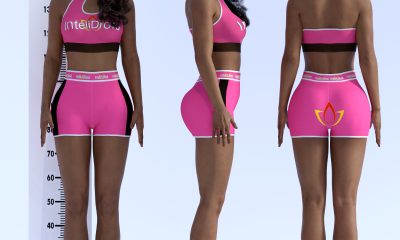
2025 isn’t sci-fi anymore. Chinese firms like Starpery Technology and WMdoll are dropping next-gen AI sex robots that talk back, remember your kinks, moan your name, and adapt their personality in real time. These aren’t blow-up dolls from 2005. They’re hyper-realistic silicone goddesses with soft skin, responsive hips, facial expressions, and large-language-model brains trained to flirt, console, and fuck exactly how you like it—without the attitude, the “not tonight,” or the post-sex ghosting.They never get headaches.

They never weaponize sex.

They never compare you to their ex or demand you split the bill while swiping on better options.They learn. They evolve. They become your perfect woman.And men are lining up. Why waste years grinding apps, getting rejected, and funding women’s lifestyles when you can own the ultimate companion for a fraction of the lifetime cost of divorce, child support, or endless dates?

This Isn’t “Objectification”—It’s Evolution

The pearl-clutchers scream “dehumanizing!” But let’s be brutally honest: men have always sought low-effort pleasure—porn, prostitutes, fleshlight. Technology just made it premium. AI dolls don’t replace real relationships for men who can get them. They replace the impossibility of relationships for the growing underclass of average guys that modern feminism helped create.

The same women boycotting men are now watching their “movement” birth the very thing they fear most: men who no longer need them. Not for sex. Not for validation. Not for anything.

As the original Redditor (a woman with a boyfriend, mind you) wrote: “Modern dating is hellish and why would I blame men for wanting out?”

Exactly. Stop gaslighting. Stop calling it “incel talk.” This is market forces at work. Supply of willing female partners drops? Demand creates substitutes. Simple as that.

The Future Is Provocative—and Unstoppable

By 2030 these AI companions will have full-body robotics, emotional depth that fools most therapists, and customization so wild you can literally design your dream woman’s face, body, voice, and submissive (or dominant) personality.

Some will still choose real women. Many won’t.And the 4B warriors? They’ll seethe in their cat-filled apartments, posting manifestos about how “men are the problem” while their biological clocks scream and the robots keep getting better.

Men aren’t going back. Why would they?

The robot sex dolls with AI aren’t a bug.

They’re the feature.

They’re the natural, inevitable, and—yes—glorious evolution of human sexuality in a world that told men they’re disposable.

Embrace it, ladies. Or don’t.

The dolls already do.

Uncategorized

Humanoid Robotics Breakthroughs: Marathon Mastery, Ping-Pong Prodigies, and Rising Geopolitical Stakes

Honor Lightning runs record half-marathon, Sony Ace beats ping-pong pros, AGIBOT/Faraday advance embodied AI amid U.S. robot legislation. InteliDoll empowers developers to pioneer next-gen humanoids.
Published

on

By

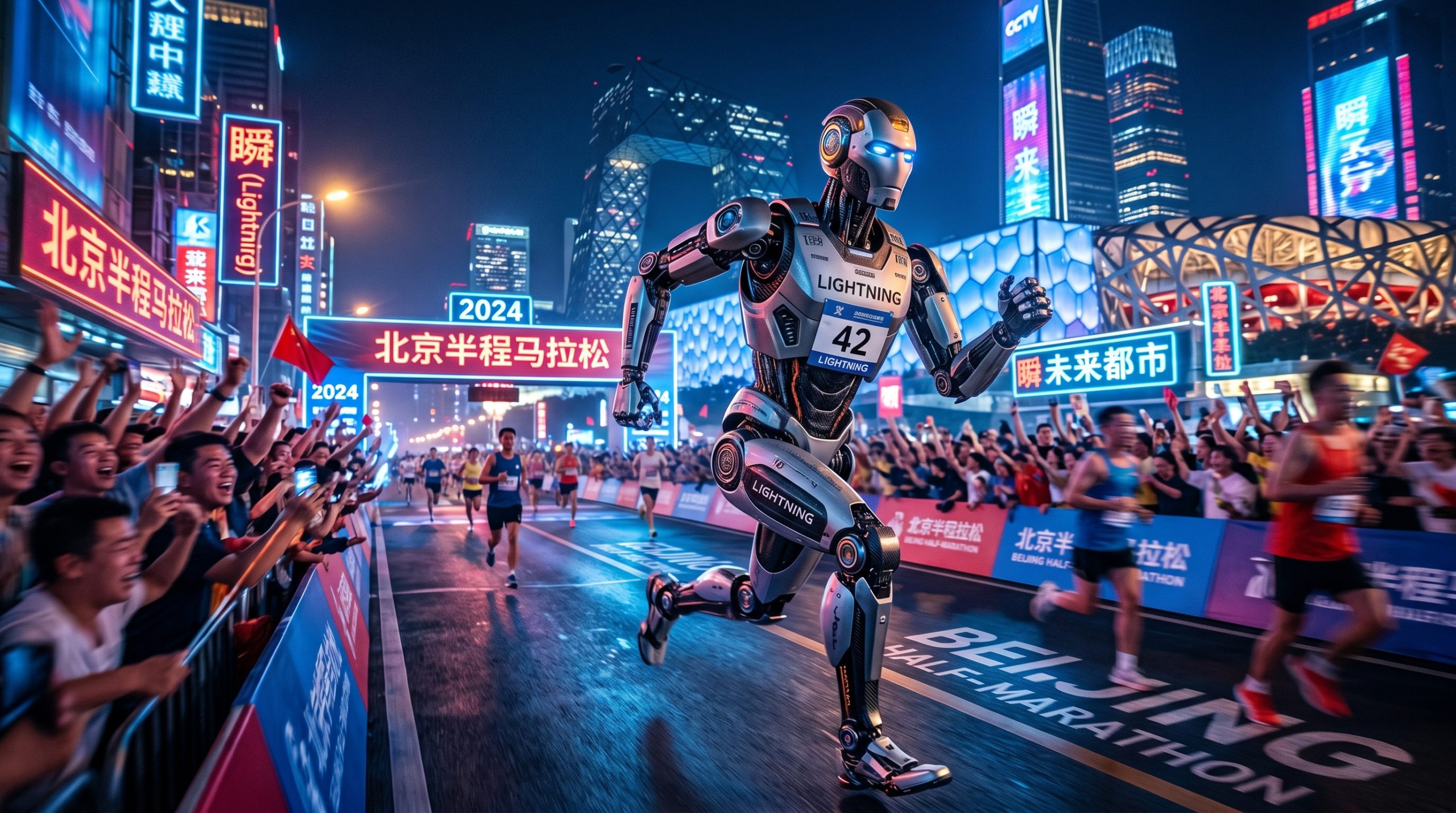
The past 48 hours have delivered stunning advancements in humanoid robotics and embodied AI, underscoring the field’s explosive trajectory. Honor’s ‘Lightning’ humanoid robot shattered the human half-marathon world record in Beijing, Sony’s AI-powered ‘Ace’ vanquished table tennis experts, and new ecosystems from AGIBOT and Faraday Future propel industrial and educational applications. Meanwhile, U.S. legislation targets Chinese robotics dominance. At InteliDoll, we see these as harbingers of a humanoid revolution–and our platform equips developers to lead it.

Endurance Redefined: Honor Lightning’s Marathon Feat

In Beijing, over 100 robots competed, with Lightning finishing a half-marathon in 50:26–beating human records. This showcases leaps in battery life, locomotion, and autonomy, critical for service droids in real-world deployment.

Implications for Developers: Simulate endurance with InteliDoll’s physics engines; train loco-manipulation for dynamic environments.

Dexterity Milestone: Sony Ace Conquers Ping-Pong

Ace adapted in real-time against pros, highlighting progress in visuo-motor control–key for dexterous manipulation in healthcare/hospitality.

Build Yours: Leverage InteliDoll’s computer vision models to replicate; integrate for service robot interactions.

Embodied AI Ecosystems Scale Up

AGIBOT’s multimodal foundation models enable autonomous learning for logistics. Faraday Future’s $45M-funded EAI targets home education, expanding embodied AI beyond factories.

InteliDoll’s open platform accelerates this: deploy custom models for autonomy breakthroughs.

Legislative Headwinds: U.S. Bills vs. Chinese Robots

Bipartisan acts like ‘Humanoid ROBOT Act’ ban federal use of adversarial humanoids, citing security. Ethics and legislation will shape global markets.

Strategic Pivot: InteliDoll fosters Western innovation, compliant dev tools for sovereign AI robotics.

InteliDoll Vision: We’re building the platform where tomorrow’s Figure 03 or Atlas equivalents emerge. Join our community: explore docs, contribute models, prototype humanoids. The future is embodied–shape it with us.

Sources: PBS, CBS, LA Times, FT, Bisinfotech, LasVegasSun, TheRobotReport.

Continue Reading

Uncategorized

Embodied AI Stops Being a Demo the Moment It Survives the Real World

The humanoid robotics story is changing fast. The serious question is no longer whether embodied AI can impress onstage, but whether it can survive factories, homes, and service environments where uptime, safety, and repeatability actually matter.
Published

on

By

For years, humanoid robotics lived in a comfortable fantasy zone. A robot could wave, walk, stack a few objects, or perform a tightly controlled trick, and the industry would treat it like proof that the future had arrived.

That era is ending.

The most important robotics shift happening right now is not another polished demo. It is the move from demonstration to deployment. This week’s embodied AI news makes that clear from multiple directions: industrial manufacturing, household service, and the supply-chain discipline required to scale both.

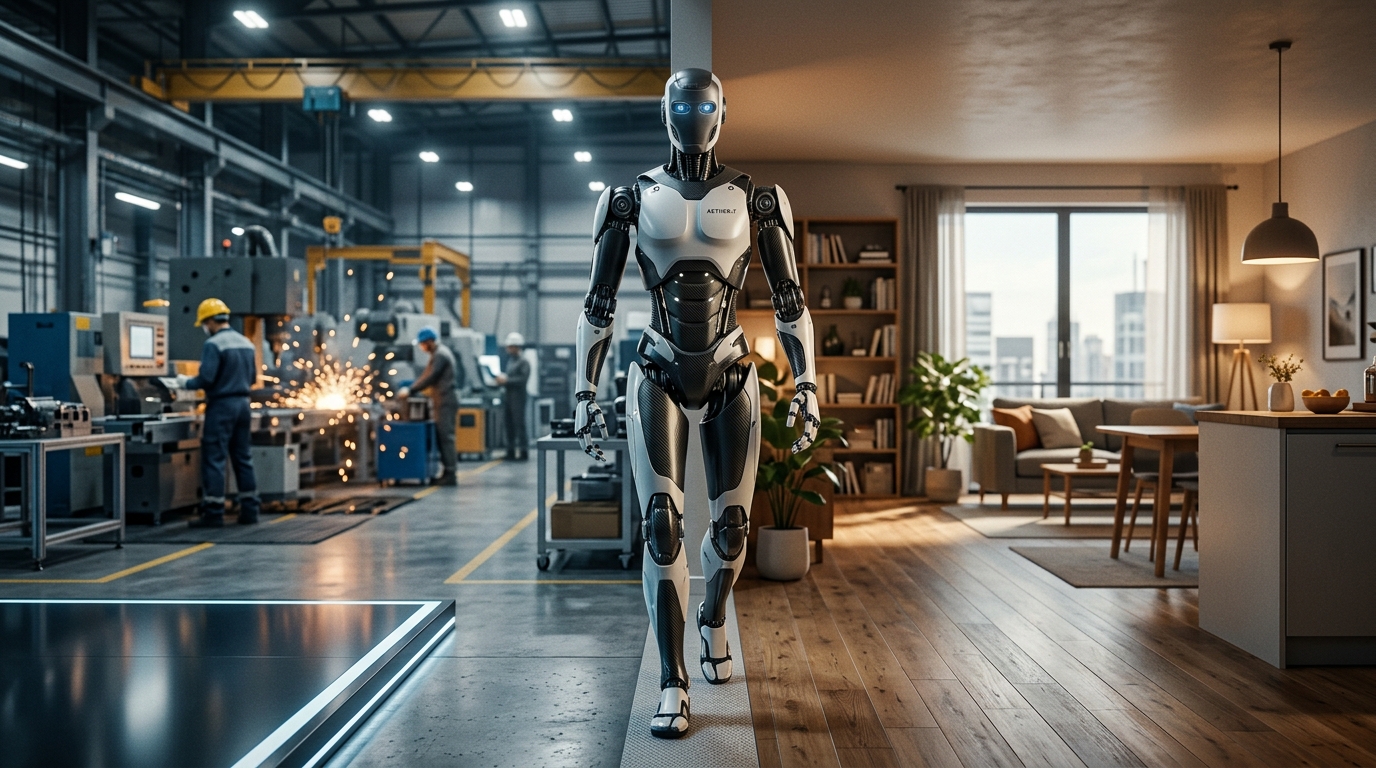
One of the clearest signals comes from the latest reporting around large-scale production partnerships and live deployments. Agibot’s humanoid systems are being positioned as real workers inside live electronics manufacturing. Jabil, through its work helping scale Apptronik’s Apollo robot, is saying the quiet part out loud: intelligence alone is not the bottleneck anymore. Industrialization is. In other words, the future of humanoid robotics will be decided not just by models and demos, but by manufacturability, testing discipline, maintenance, reliability, and cost per unit.

That is a huge shift, and it favors platforms over stunts.

Factories are becoming the truth serum for embodied AI

Manufacturing floors and warehouse environments are where the robotics conversation gets honest. In those spaces, nobody cares if a robot looked impressive in a keynote. They care whether it can perform useful work safely, repeatedly, and with minimal disruption.

That is why industrial deployments matter so much. Warehouses and factories already have pressure, timing, labor constraints, and clear output expectations. They are unforgiving environments, which makes them perfect proving grounds. If a humanoid robot can deliver repeatable value there, it has crossed a threshold from spectacle to infrastructure.

The lesson for companies building companion robots, service robots, or lifestyle robotics platforms is obvious. Real-world trust will come from operational consistency, not theatrical novelty. The brands that win will be the ones that understand maintenance cycles, fault recovery, parts availability, fleet management, and safe interaction boundaries.

The home is still harder than the stage

At the same time, home robotics is becoming more serious. UniX AI’s claims around Panther’s continuous multi-task validation in real, unmodified homes point toward the real frontier: domestic environments are messy, dynamic, emotional, and full of interruptions. A robot that can function there has to do more than move gracefully. It has to handle clutter, unpredictability, task switching, and human behavior without collapsing into confusion.

This is exactly why the home matters so much for InteliDoll’s long-term vision. Homes are not controlled industrial cells. They are intimate, unstable, high-context spaces. Any embodied AI system built for companionship, care, assistance, or presence will have to succeed in those conditions, not just in a showroom.

That means embodied intelligence has to become deeply situational. It needs memory, environmental awareness, safe autonomy, and behavior that feels reliable rather than uncanny. The challenge is not simply making a humanoid form factor attractive. It is building a platform that can live with people, respond to interruption, and preserve trust over time.

Regulation and trust are about to define the winners

As robots move closer to healthcare, eldercare, domestic service, and emotionally sensitive roles, regulation becomes a design issue, not a legal footnote. The market is already seeing pressure around safety, approval pathways, accountability, and operational controls. That pressure will intensify as embodied AI moves into spaces where failure is personal.

This matters especially for any company aiming to shape the next generation of human-adjacent robotics. Trust will not come from promising intelligence in the abstract. It will come from proving safe behavior, predictable boundaries, privacy discipline, and update pathways that make the system better instead of more dangerous.

That is where platform thinking becomes essential. A robot is not just hardware. It is a living stack of sensors, policies, personality layers, service logic, and maintenance obligations. The companies that understand that full stack will have a real advantage.

InteliDoll’s opportunity is bigger than the gadget race

The most exciting takeaway from this week is that embodied AI is finally being forced to grow up. The conversation is moving away from “Can it do something cool?” and toward “Can it operate in daily life, under pressure, at scale?”

That is exactly the right question.

For InteliDoll, the opportunity is not to imitate every loud robotics headline. It is to help define what a trustworthy humanoid presence looks like when the robot is not on stage, but in the room. That means blending physical design, adaptive intelligence, continuity of interaction, and practical operational reliability into one coherent system.

The future leaders in embodied AI will not be the ones with the flashiest clip. They will be the ones that build platforms people can actually live with.

And that future is arriving faster than most of the market seems ready for.

Continue Reading

Uncategorized

Embodied AI Is Leaving the Lab, and the Winners Will Be the Platforms Built for Daily Life
Published

on

By

From household-capable robots to new AI companion regulation, this week’s robotics news points toward a future shaped less by demos and more by usability, trust, and real-world deployment.

The most important shift in robotics right now is not just that machines are getting more capable. It is that embodied AI is being forced into reality. The latest wave of news in humanoid and service robotics shows a market moving away from isolated lab demos and toward a much harder test: can a system operate in homes, workplaces, and public environments with enough reliability, safety, and adaptability to matter every day?

That is the real threshold, and this week offered several signals that the industry is approaching it faster than many expected.

Embodied AI is becoming more general, not just more impressive

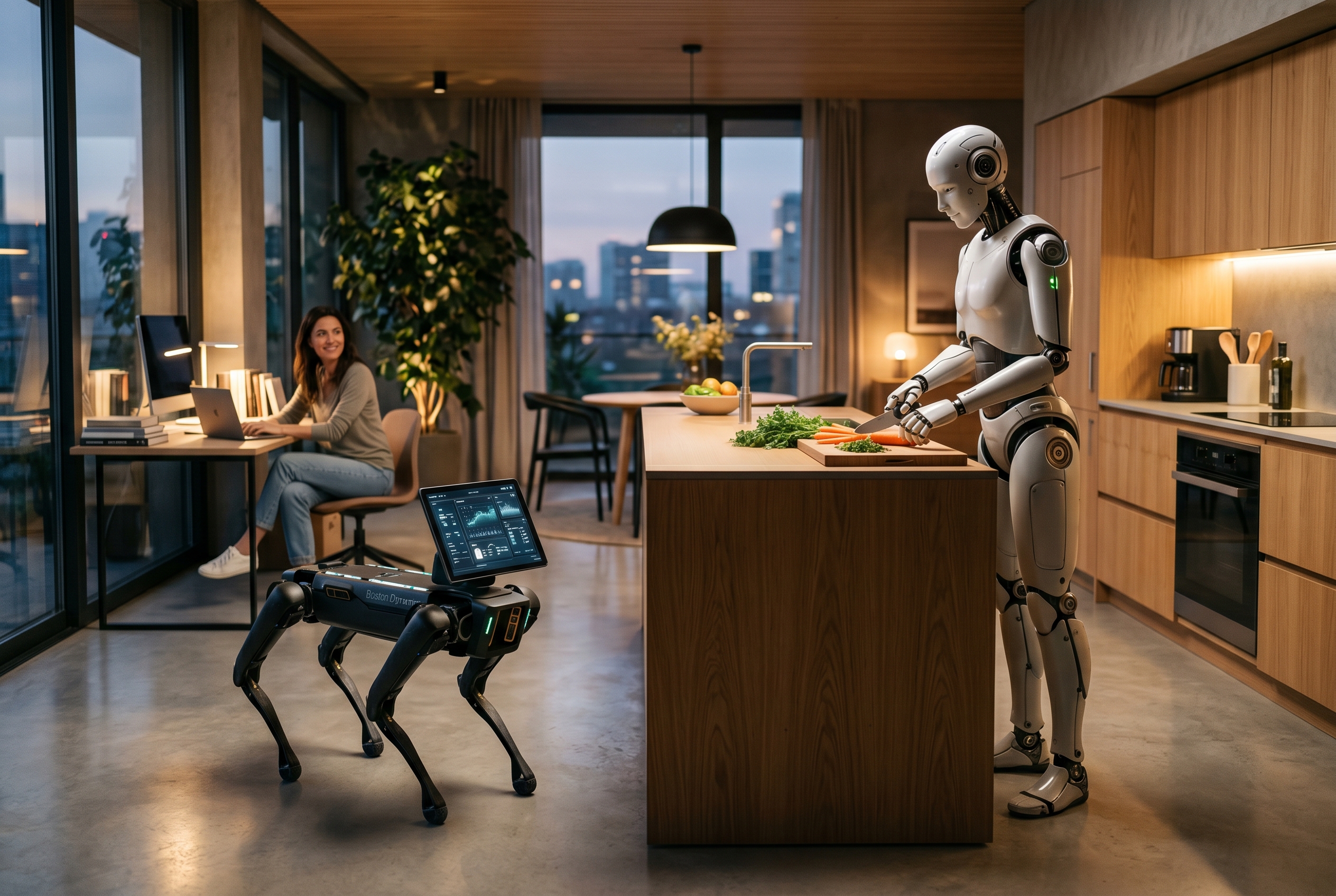
Boston Dynamics showed off a Gemini-enhanced Spot robot that could read a handwritten to-do list and carry out practical tasks like tidying shoes, picking up cans, moving laundry, and checking a mousetrap. On the surface, that may look like another polished robotics demo. The deeper point is more interesting. The value is no longer in a robot doing one chore well. The value is in a robot interpreting context, switching between tasks, and handling real physical environments with less hand-coded rigidity.

That same pattern appears in broader embodied AI development. The next winners are likely to be the systems that combine perception, planning, memory, and manipulation in ways that reduce friction for actual users. Generality is starting to matter more than theatrical spectacle.

Deployment-first robotics is starting to separate itself from prototype culture

UniX AI’s latest push with Panther is another strong example of where the field is headed. Instead of optimizing for the most human-like presentation at any cost, Panther leans into a wheeled dual-arm architecture built around practical deployment in real indoor spaces. That design choice says a lot about where commercial robotics is maturing. The companies that win first may not be the ones with the flashiest humanoid silhouette. They may be the ones willing to make platform choices that improve stability, uptime, reach, and task execution in the environments people actually live and work in.

That should sound familiar to anyone watching AI companions too. Real adoption usually comes from reducing friction, not from chasing the most dramatic headline.

InteliDoll should be paying close attention to this pattern

For InteliDoll, the lesson is straightforward. The market for advanced AI companions is moving in the same direction as the robotics market more broadly. Buyers are becoming more interested in systems that feel usable, responsive, and trustworthy over time. They want memory that works, interaction that adapts, maintenance that is manageable, and interfaces that make the product feel like a platform rather than a novelty.

That is why the future of AI intimacy will likely be shaped by embodied intelligence principles even before fully mobile humanoid bodies become common. Better perception, better context retention, better personalization, and better real-world reliability are all part of the same larger transition. The categories may look different, but the infrastructure logic is converging.

Regulation is also becoming part of product design

This week also brought another reminder that companies cannot think only about capability. They also have to think about governance. Oregon has now joined Washington in creating an AI companion law, with requirements around disclosure, user awareness, and protocols for high-risk interactions such as self-harm signals. That matters well beyond chatbots. It signals that products simulating sustained human-like interaction are moving into a more regulated era.

For AI companion brands, this is not a side issue. Transparency, user safeguards, disclosure, and boundary design are becoming core product features whether companies like it or not. The brands that adapt early will likely be in a much stronger position than those treating regulation as an afterthought.

The real moat is daily-life readiness

What ties these developments together is a single commercial truth: the strongest AI systems will be the ones ready for daily life. That means not only better hardware and smarter models, but also clearer user trust signals, more reliable task execution, and product architectures built around long-term ownership instead of one-time fascination.

In robotics, that means machines that can move through homes and job sites without becoming expensive science projects. In AI companionship, it means systems that can sustain believable, safe, personalized interaction while respecting user boundaries and emerging legal expectations.

Where the platform vision gets stronger

This is exactly where the InteliDoll platform story can get more compelling. If the company frames itself not just as a hardware brand but as part of the broader embodied AI movement, it can position its products around responsiveness, memory, customization, maintenance simplicity, and long-horizon trust. That is a stronger story than hype alone, because it connects the product to the larger question everyone in AI is now facing: can this technology become part of real life?

That is no longer a future-tense question. The market is beginning to answer it now.

If you are watching the next phase of AI companionship, keep your eye on the same things robotics investors are watching: deployment, adaptability, safety, and repeat-use value. Those are the signals that separate a demo from a platform.

Continue Reading
Advertisement

Trending